Best Acoustic Guitar for Beginners: 5 Picks Under $500 (2026)
The beginner acoustics that show up on every list, narrowed down to one default and four alternatives. Here's what to buy at $150, $220, $330, and $500, and what to skip.
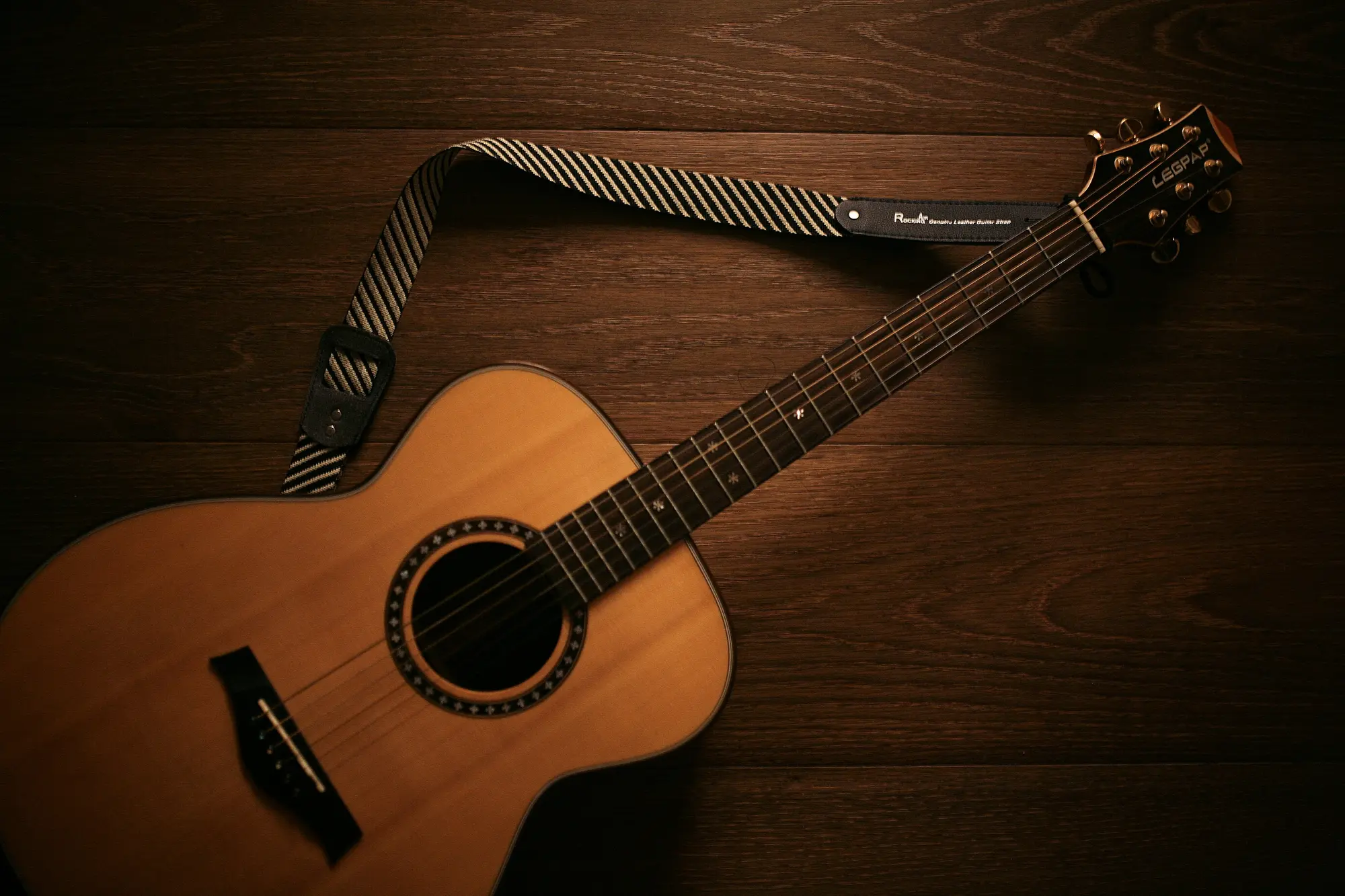
If you want the short version: buy the Yamaha FG800. It costs around $220, has a solid Sitka spruce top (rare at this price), holds tune, and feels like a guitar that wants you to keep playing. Every other pick on this page is a variation on that recommendation for a specific situation.
Our top pick in one sentence
The Yamaha FG800 is the standard recommendation for anyone starting out, no asterisks. It punches well above its price, the build quality is consistent across units (Yamaha’s QC is famously tight), and if you decide in a year you want something nicer, you’ll have no trouble selling it for close to what you paid.
If you don’t want to read the next 1,200 words, stop here and grab one.
What actually matters in a first acoustic
Most “best beginner guitar” articles drown you in tonewood paragraphs. You don’t need that yet. Here’s what genuinely affects whether you’ll still be playing in three months.
Solid top vs laminate. A solid wood top vibrates as one piece and sounds noticeably better than the plywood-style laminate on most cheap guitars. The FG800 has a solid Sitka spruce top at around $220, which used to be a $400 feature. This is the single upgrade that matters most.
Action height. Action is the gap between the strings and the fretboard. If your fingers ache after ten minutes, the guitar is fighting you. A factory-fresh budget guitar often has high action that a $40 setup at a local shop will fix. More on that below.
Body size. Three shapes you’ll see:
- Dreadnought: the big, square-shouldered shape. Loud, full, the default for strumming pop and folk. The FG800 is a dreadnought.
- Concert / grand concert: smaller body, often more comfortable for fingerpicking and for players with shorter arms.
- Parlor: smaller still. Quieter, intimate, great for couches and small apartments.
Steel vs nylon. Steel-string acoustics are what you want for pop, rock, folk, country, singer-songwriter stuff. Classical (nylon-string) guitars are for classical and flamenco, and the wider neck can be tough for small hands despite the softer strings. Almost every beginner I know learns on steel.
That’s the whole framework. Skip the bracing-pattern rabbit holes for now.
The five guitars worth your money
| Product | Price | Best for | Notes |
|---|---|---|---|
| Yamaha FG800 | ~$220 | Default first guitar | Solid spruce top, dreadnought, easy to resell |
| Fender FA-125 / Yamaha F325D | ~$150 | Hobby-test budget | Laminate top, fine but not inspiring |
| Fender CD-60S | ~$330 | Committed beginner with budget | Solid mahogany or spruce top, nicer fit and finish |
| Yamaha FS800 / Taylor Academy 10 | $200 to $350 | Smaller frames, fingerstyle | Concert body, more comfortable than a dread |
| Taylor GS Mini | ~$500 | Travel, small spaces, stretch budget | Compact body with surprising volume |
Yamaha FG800 (around $220)
The default. Solid Sitka spruce top, nato back and sides, scalloped bracing that lets the top breathe. It sounds like a guitar that costs $400. The neck is a comfortable C-shape that doesn’t punish small hands the way some dreads do. Honest weakness: factory strings are nothing special, swap them after a month. Who it’s for: anyone who isn’t sure yet but is serious enough to want a guitar that won’t hold them back at any point in their first two years.
Ultra-budget (around $150): Fender FA-125 or Yamaha F325D class
Fully laminate, less resonance, but completely playable. Pick this if you’re genuinely unsure whether guitar will stick. Honest weakness: you can hear the difference next to the FG800 in about three seconds. Who it’s for: parents buying for a kid who hasn’t committed, or adults running a “do I actually like this hobby” experiment.
Step-up (around $330): Fender CD-60S class
Solid top (usually mahogany or spruce), tidier finishing, rolled fretboard edges that feel friendlier under the hand. Honest weakness: the tonal jump from the FG800 isn’t as big as the price jump suggests. Who it’s for: someone who already knows they’ll be playing a year from now and wants to skip a future upgrade.
Smaller body (around $200 to $350): Yamaha FS800 or Taylor Academy 10 class
Same musical DNA as the FG800 but with a concert-sized body. Easier to wrap your arm around if you’re under about 5’6”, and friendlier for fingerpicking. The Taylor Academy adds an armrest bevel that’s genuinely lovely. Honest weakness: less low-end thump than a dreadnought. Who it’s for: smaller players, fingerstyle leaners, anyone who finds dreadnoughts awkward against the body.

Travel / parlor (around $500): Taylor GS Mini class
Stretch pick. Smaller than a parlor, louder than it has any right to be, built like a tank. Honest weakness: $500 is real money for a first guitar, and a full-size dread will out-resonate it. Who it’s for: cramped apartments, frequent travelers, anyone who’d rather grab a guitar off the wall than pull one out of a case.
What you actually need beyond the guitar
Four small things that will save you grief in week one.
A clip-on tuner. The Snark ST-2 clamps to the headstock and reads vibration through the wood, so it works in noisy rooms. Tuning by ear is a skill worth building eventually, but not on day one. (If you want a primer, here’s how to tune a guitar once you have the tuner in hand.)
Spare strings. You will snap one. Probably the high E, probably while tuning. D’Addario EJ16 phosphor bronze lights are the safe default for any steel-string acoustic in this list.
A few picks. A variety pack of Dunlop Tortex picks lets you find your thickness without committing. Most beginners settle around .73mm or .88mm for strumming.
A method book. Optional, but the Hal Leonard Guitar Method Book 1 pays for itself in the first week. Pair it with a free site for beginner guitar chords and you have a real curriculum without a teacher. If you want a fuller plan, we wrote one for teaching yourself guitar at home.
Three mistakes first-time buyers make
The $79 Amazon special. There’s a category of acoustic guitars under about $90 that are functionally unplayable: action you couldn’t fix with a chisel, tuners that won’t hold a note for thirty seconds, intonation that goes sour by the fifth fret. They kill motivation faster than any difficult chord. The FG800 at $220 isn’t expensive. It’s the floor.
Skipping the setup. I said it in the QuickTip and I’ll say it again. Forty dollars at a local shop transforms most budget guitars. Bring it in the week you buy it.
Buying used from a stranger before you can spot problems. Used can be a great deal, but a warped neck, a lifted bridge, or a cracked top can turn a “bargain” into a paperweight. If you go used: sight down the neck from the headstock toward the body (it should look straight, with maybe a hair of relief), look at where the bridge meets the top (no daylight, no glue lines pulling up), and play every fret on every string listening for buzzes. If you can’t do those three things confidently, buy new.

Where to buy
For the FG800 specifically, Amazon is fine. Yamaha’s quality control is consistent enough that you’re not really gambling.
For anything else on the list, Sweetwater and Guitar Center are the safer bets. Both inspect guitars before shipping (Sweetwater more famously so), and both have return policies that matter when you can’t physically pick the unit. If there’s a real music store within a reasonable drive, go play three or four guitars before you commit, even if you ultimately order online. Holding the body, feeling the neck width, hearing the room sound: those things matter and you can’t get them through a screen.
Quick FAQ
Is acoustic harder than electric for beginners? Slightly. Steel acoustic strings have higher tension, and the action is usually a touch higher than on an electric. Your fingertips will hurt for two weeks either way, then they’ll callus and you’ll forget about it. Pick the one whose sound you actually want to play.
Should I buy a starter pack? Usually no, with one exception. Acoustic starter packs tend to skimp on the guitar to fit a gig bag and tuner in the box. The guitar is the part that matters. Buy the FG800 separately and add a tuner. If you’re going electric instead, the Squier Affinity Strat pack is one of the rare exceptions where the guitar is genuinely fine.
Is a 3/4-size guitar okay for adults with small hands? Yes. Ed Sheeran built his whole career on one. Smaller bodies with full-scale necks (like the Taylor GS Mini) can be even better, since you keep adult string spacing while losing the body bulk. Don’t let anyone gatekeep you into a dreadnought you can’t comfortably hold.

Buy the FG800. Get it set up. Spend the next ninety days playing for fifteen minutes a day instead of researching the next guitar. That’s the whole plan.