Easy Guitar Songs for Beginners (Sorted by Chords You Know)
Real beginner guitar songs grouped by the chords they actually need. Two-chord, three-chord, G-C-D, capo songs. Pick the section that matches what you know.
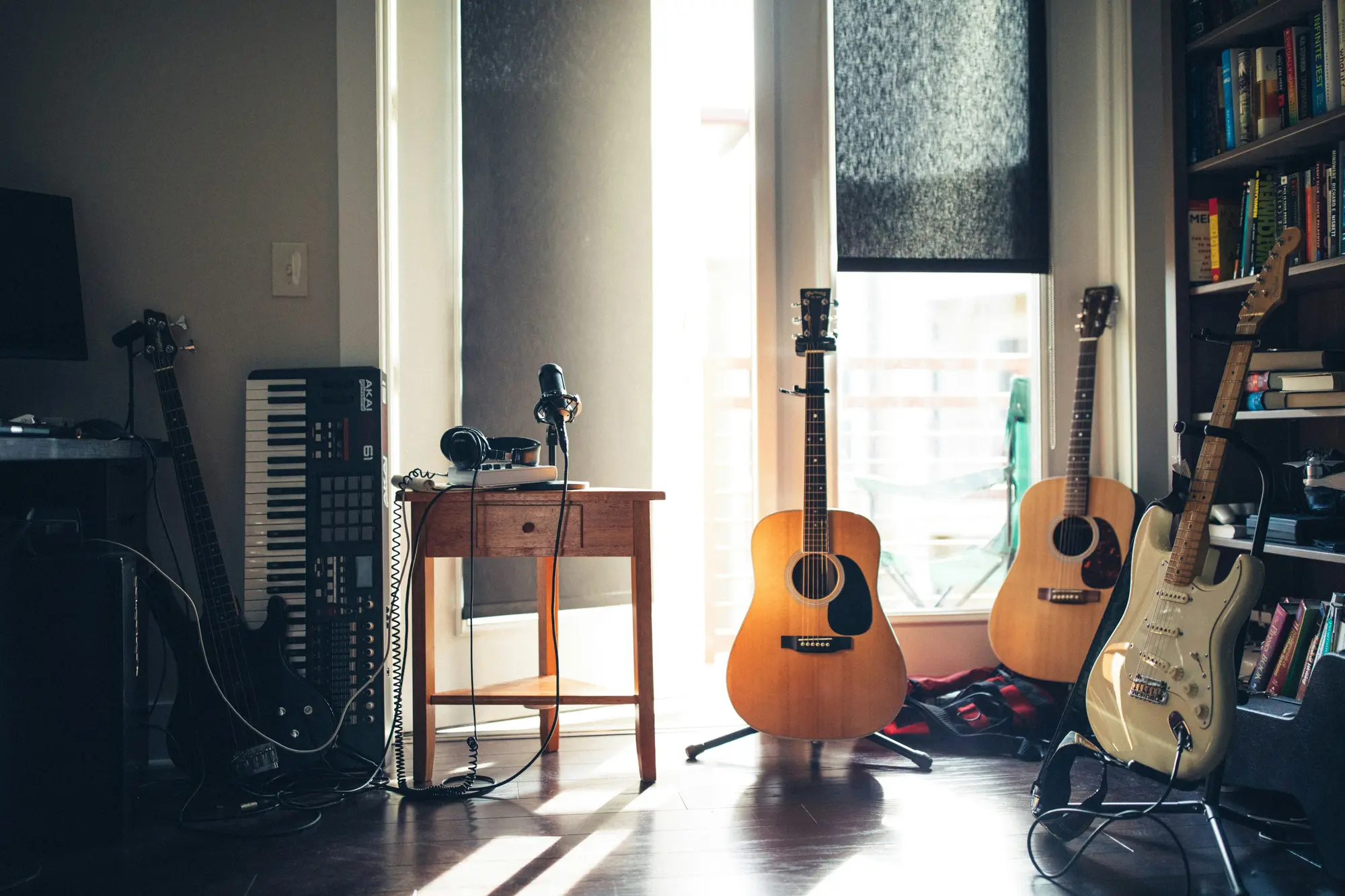
You learned a few open chords and now you want to play actual music, not exercises. Good. The fastest way to get there is to pick songs that match the shapes you already know, then loop them until your fingers stop arguing. Below, every song is grouped by the chords it needs, starting with two-chord tunes and working up.
Before you start: tune up and check your chords
Tune the guitar before you do anything else. A clean G chord on an out-of-tune instrument sounds like a wet cat, and you’ll blame your fingers when it isn’t your fault. If you don’t have a tuner habit yet, our tuning guide walks through clip-on, app, and by-ear methods.
Every song on this page uses shapes covered in the beginner chord guide: Em, Am, C, G, D, plus an occasional F or A. If any of those still feel rough, drill the change between two of them for sixty seconds before adding a third.
One honest reminder: strumming consistently matters more than song count. Three songs played daily for a week will teach you more than twenty played once.

Two-chord songs (start here on day one)
If you can switch between two chords without looking, you can already play these.
“Horse With No Name” by America. Em and a simplified D6 shape (or just plain D if D6 feels fussy). The same two-chord riff loops the entire song, so once you nail the change, you’re done learning the song.
“Achy Breaky Heart” by Billy Ray Cyrus. Originally A and E. If A feels cramped, slap a capo on the third fret and play G and D shapes instead. Same song, easier hand.
“Jane Says” by Jane’s Addiction. G to A, over and over. The A is the hard part for most beginners. Capo at fret 2 and play G and A as G-shape and A-shape from a capo’d position, or just keep working that A until it cleans up.
Three-chord songs with G, C, and D
This is the holy trinity of beginner guitar. Master these three shapes and a thousand songs open up.
“Love Me Do” by The Beatles. G, C, D. Verse and chorus share the same loop. Strum on the downbeats and you’re already there.
“Bad Moon Rising” by CCR. D, A, G mostly, with a quick C in the chorus. If A is shaky, capo 2 and play C, G, F shapes (well, G shape from capo). Or just push through the A.
“Sweet Home Alabama” by Lynyrd Skynyrd. D, C, G in a repeating loop the whole song. The intro lick is famous but optional. Strumming the chords gets you 80 percent of the way.
“Leaving on a Jet Plane” by John Denver. G, C, D again. Slower tempo, which makes it forgiving while you’re still hunting for chord shapes.
Songs that add Em (G, D, Em, C territory)
Em is the friendliest chord on the guitar. Two fingers, no muting trouble. Add it to your G-C-D vocabulary and the song list explodes.
“Stand by Me” by Ben E. King. G, Em, C, D, in that order, looping. The bassline is iconic but you can carry the whole song with steady chord strums.
“Knockin’ on Heaven’s Door” by Bob Dylan. G, D, Am, C is the classic version, though plenty of players swap the Am for an Em and call it a day. Both work.
“Wonderwall” by Oasis. Capo on fret 2, then play Em7, G, Dsus4, and A7sus4 shapes. Those shapes look scary on paper but they share fingers, so the changes are easier than they read.
“Let It Be” by The Beatles. A simplified G, D, Em, C version covers the whole song. Skip the piano flourishes. Your guitar version will sound right.
Songs that need an Am
Am is C with one finger moved. If you can play C, you’re a finger-shift away from Am.
“House of the Rising Sun” by The Animals. Am, C, D, F, E. The F is the speed bump. Use a mini-F (just the top three strings) until the full barre feels reachable.
“Hurt” by Johnny Cash. Am, C, D. Slow, sparse, devastating. Fingerpicking sounds beautiful here but a soft strum works fine.
“Zombie” by The Cranberries. Em, Cadd9, G, D. Cadd9 is just C with your pinky added on the third fret of the B string. Most people find it easier to switch from G to Cadd9 than G to a clean C.
“Time of Your Life (Good Riddance)” by Green Day. G, C, D, Em. Fingerpicked in the recording, but strumming works for learning the changes first.

Songs that need a capo (and why that’s a good thing)
A capo is a clamp that bars all six strings at one fret. It raises the pitch of every open string, which means you can play familiar shapes in a different key without learning new ones. If a song is in Bb (rough for beginners) but you can capo at fret 3 and play G shapes, you sound like you’re playing Bb while your hands play G.
“Wonderwall” by Oasis lives at capo 2. Without the capo, the chord shapes get nasty.
“Wagon Wheel” by Old Crow Medicine Show / Darius Rucker. Capo 2, then G, D, Em, C all the way through. One of the highest reward-per-effort songs you can learn.
“Hey There Delilah” by Plain White T’s. Fingerpicked, capo 2, mostly D and F#m shapes (the F#m is a small barre, but the song is patient enough that you have time to grab it).
A Shubb C1 is the capo most teachers reach for. It clamps with a screw rather than a spring, so you can dial in just enough pressure to fret cleanly without yanking the strings sharp.
How to actually learn one of these this week
Pick one song. Just one. Spend the first two minutes of practice looping the chord changes alone, no strumming pattern, no rhythm, just clean transitions. Day two, add a basic down-strum. Day three, play along with the recording at full speed and accept that you’ll fall off the train a few times.
If you want a wider plan beyond song-grinding (technique, theory, ear training, the whole thing), our self-teaching guide lays out a six-month path. But honestly, getting one song under your fingers this week will do more for your motivation than any plan.
Pick a section that matches the chords you already know. Pick one song from that section. Play it tomorrow.